
Cracks Climbing the Drywall or Brick in a Stair-Step Pattern? What They Mean
Quick Answer: A stair-step crack climbs diagonally along the mortar joints in brick or block, or up the drywall near a door or window, in a staggered pattern that looks like a set of stairs. It almost always points to the same thing: part of the foundation has moved, and one section has settled lower than the section next to it. The cracks track the mortar joints because that is the weakest path through the wall. In North Texas, the usual driver is expansive clay soil swelling after rain and shrinking in drought, which lifts and drops different parts of the slab at different rates. A single hairline that never changes may be cosmetic, but a stair-step pattern that widens, lengthens, or shows up alongside sticking doors is a movement signal worth having looked at.
You are walking the side of the house, or standing in the hallway, and you catch it out of the corner of your eye. A crack that does not run straight. Instead it climbs, jogging over one brick, up a joint, over again, up again, like a staircase drawn onto the wall. Maybe it is on the outside in the brick veneer near a corner. Maybe it is inside, running up the drywall from the top corner of a doorframe. Either way, it looks different from the thin, straight hairlines you have learned to ignore, and something about the diagonal climb makes you stop.
That instinct is correct. A stair-step crack is one of the more honest signals a house gives you, because of where it forms and why. Straight vertical cracks can come from concrete curing and shrinking as it dries. A diagonal, staggered crack that follows the mortar is a different animal. It usually means the ground under one part of the foundation has moved relative to the ground under another part, and the wall is being pulled apart along its weakest seams. Here is how to read what you are seeing, what is driving it in this part of Texas, and how to tell a crack that is just there from a crack that is going somewhere.
Why the Crack Climbs Instead of Running Straight
The mortar joint is the path of least resistance
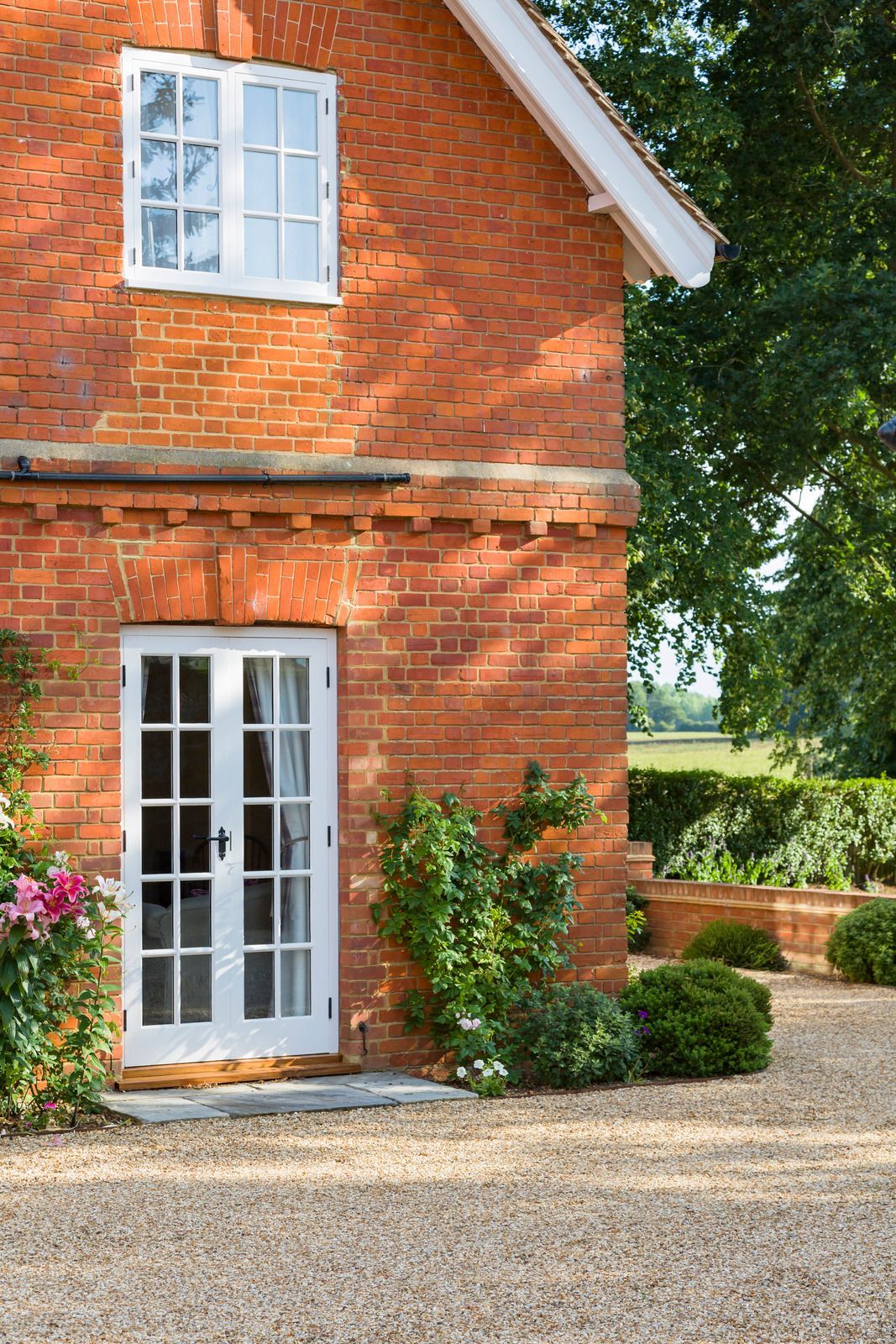
A brick wall is not one solid sheet. It is a grid of hard units bonded by softer mortar. When stress builds, the crack avoids the stronger brick and travels around the units through the joints. Across a running-bond wall, that easy route naturally forms the diagonal staircase you see.
The diagonal points toward where the movement is
Because a stair-step crack forms under shear stress, its angle leans toward the settlement. When one corner of the foundation drops, the wall above is dragged down while the rest stays put. That is why these cracks so often start near windows, doorframes, and corners, where stress concentrates and the wall is weakest.
Drywall does the same thing on the inside
You do not need brick to get a stair-step. Interior drywall over a moving frame cracks in the same staggered, diagonal way, usually launching from a door or window corner toward the ceiling. It tells the same story the brick tells outside, and often it shows up first, so do not wait.
What Is Actually Moving Underneath
Differential settlement is the mechanism
A little uniform settling, the whole house easing down evenly over its first years, rarely cracks anything. The problem is differential settlement, where one part of the foundation moves and an adjacent part does not. That difference tears the wall, and stair-step cracks are one of the most reliable outward signs.
In North Texas, the soil is the usual culprit
Much of Dallas-Fort Worth sits on expansive clay. It swells when it takes on water and shrinks as it dries, and the volume change is not small. That uplift pressure lifts whatever sits on top, then drops it. Because moisture is never uniform across a lot, the foundation rides that cycle unevenly.
The moisture swing here is severe
North Texas is a place of extremes: long droughts and hard heat, then heavy rain. That is close to a worst case for expansive clay. In drought, the perimeter dries and drops while the shaded center stays higher. After rain it swells back. That seasonal flexing records itself in the wall above.
Tip: Take a photo of the crack with a coin or a tape measure held right beside it, and note the date. Do it again in a couple of months, ideally once after a wet spell and once after a dry one. Two dated photos that show the gap changing width tell a contractor far more than a single glance ever could, and they turn a guess into a measurement.
Trees and drainage make it local
Why one corner cracks and another does not often comes down to where the water goes. A downspout dumping at one corner keeps that soil swollen, while a large tree pulls moisture out and shrinks the soil on its side. Poor grading sets up exactly the uneven moisture that drives differential movement here.
Cosmetic or Structural: How to Read the Severity
Width and change matter more than length
A long crack is not automatically serious, and a short one is not automatically harmless. What matters is width and movement. Very thin hairlines that stay put are often cosmetic, while cracks wider than roughly a quarter inch, or that keep growing, deserve a professional look. Active change is the thing worth acting on.
Stair-step and diagonal patterns carry more weight than straight verticals
Not all cracks are equal. Thin vertical cracks in a slab or wall are frequently just shrinkage. Diagonal and stair-step cracks concern more because they signal uneven settling rather than simple curing. Horizontal cracks are a separate, more serious category tied to sideways pressure, but the climbing staggered crack sits squarely in the movement family.
The company the crack keeps is the real tell
A stair-step crack rarely shows up alone when the foundation is truly moving. Look for the supporting cast: doors sticking, windows resisting, gaps at trim and crown molding, floors that seem to slope, and brick joints separating outside. When the crack travels with two or three of these, you are looking at real movement.
Warning: Do not patch a stair-step crack with caulk or mortar and consider it handled. Filling the gap hides the one thing you actually want to watch, whether it is still moving, and a cosmetic patch over an active crack simply cracks again, often within a season. Sealing the surface also does nothing about the soil movement underneath, which is the part that is actually straining the wall. Address why the wall is moving first; cosmetic repair is the last step, not the first.
What a Real Fix Looks Like
It starts with a measurement, not a patch
Because the crack is a symptom, the useful first move is finding out how far out of level the foundation is and where. That means an elevation survey mapping the high and low spots, plus a look at drainage, grading, downspouts, and trees. The crack says something is wrong; the survey says what.
Stabilizing the foundation addresses the cause
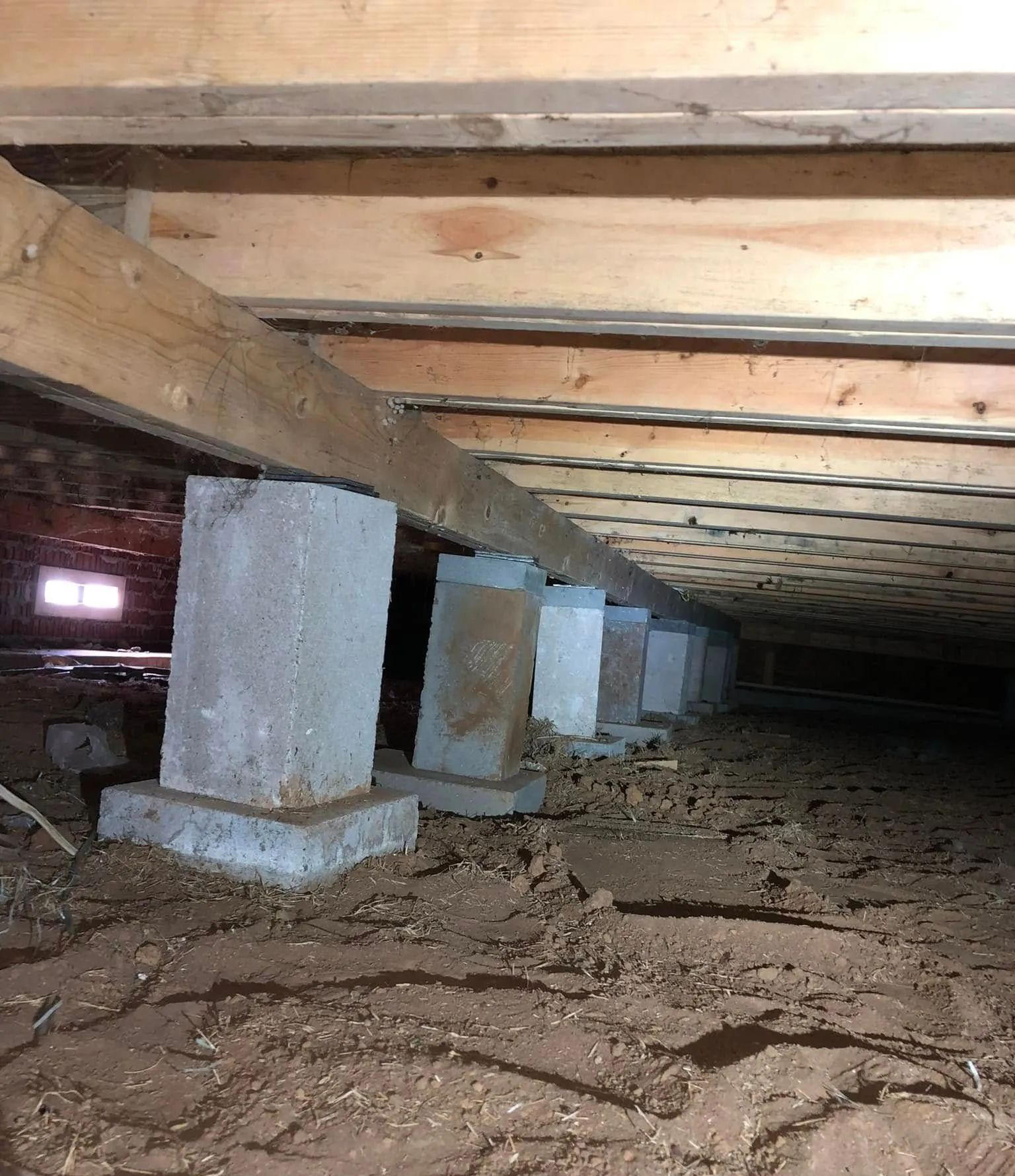
Where the ground can no longer hold a section at the right height, the answer is transferring that load down to soil or rock that does not move seasonally. Piers installed beneath the affected area lift and support the settled section toward level. Once the structure holds steady, the stair-step crack stops growing.
Water management keeps it fixed
Foundation work that ignores drainage rarely lasts on expansive clay, because the same moisture swing is still active. Lasting repairs pair the structural fix with correcting grading, extending downspouts, and adding drains where water collects. Keeping perimeter moisture steady, neither soaked nor bone dry, is what prevents the next round of cracks entirely.
Frequently Asked Questions
Are all stair-step cracks a sign of a serious foundation problem?
Not every one, but the pattern deserves respect. A thin stair-step crack unchanged for years may be settled. The concern is one wider than a quarter inch, growing, or paired with sticking doors and sloping floors.
Why do these cracks seem to get worse in late summer?
Because late summer in North Texas is when the expansive clay is driest. The perimeter soil loses moisture, shrinks, and drops the foundation edges while the center stays higher. That widens the differential and opens the cracks.
Should I be more worried about cracks in the brick or in the drywall?
Look at both, because they describe the same movement from two sides. Drywall cracks near corners often appear first, and brick cracks confirm it carried through. What matters is width, growth, and accompanying symptoms, not which one.
Can I just fill the crack and repaint?
You can, but if the foundation still moves, the patch cracks again within a season or two, because the cause was never addressed. Cosmetic repair belongs at the end, after the structure is stabilized and settled.
How can I tell if the crack is still moving?
The simplest method is dated photos with a coin or tape beside the crack, taken months apart across wet and dry periods. If the gap changes width, movement is active. An elevation survey confirms it more precisely.
Does fixing the drainage really matter if the crack is already there?
It matters greatly, because on expansive clay water drives the movement. Even after piers stabilize a section, a downspout soaking one corner keeps the soil swelling unevenly. Correcting grading and drainage is what keeps a repair holding.
Reading the Wall Before It Reads You
A stair-step crack is not a wall falling apart; it is a wall reporting. The staggered diagonal climb, the way it tracks the mortar joints, the fact that it launches from a door corner or a building corner, all of it is the structure telling you that the ground beneath one part of the house is no longer holding the same line as the ground beneath the rest. On North Texas clay, that story usually comes down to moisture: soil swelling with rain and shrinking with drought, unevenly, corner by corner, season after season. The good news is that a crack caught and measured early is a far smaller problem than one ignored until the doors will not close. Watch the width, note the company it keeps, and let the measurement, not the patch, guide what happens next.
Have the stair-step cracks evaluated before the next dry season widens them — A staggered crack climbing your brick or drywall is a movement signal, not a cosmetic one, and on North Texas clay it tends to worsen through late-summer drought. Serving Dallas, Texas, Garcia's Foundation and Drainage
starts with an elevation survey to map exactly where the foundation has settled, then stabilizes the affected area with piers and corrects the drainage, grading, and downspouts that let the soil swell and shrink unevenly in the first place. With roughly 35
years across
foundation repair
and drainage, the crew treats the cause and not just the crack, so the fix holds. Reach out for a foundation and drainage evaluation and get a clear read on what your walls are telling you.