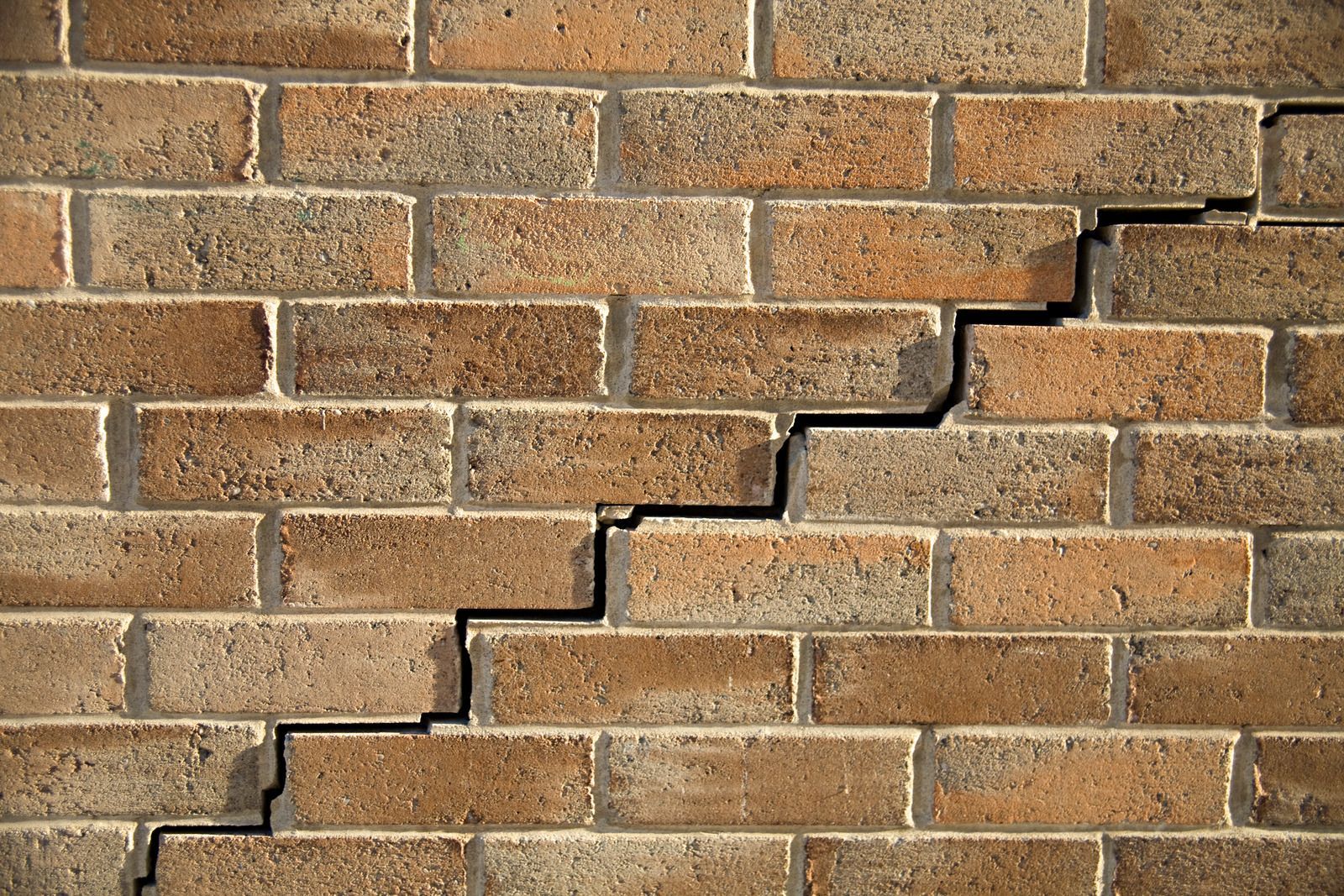

Sloping or Bouncy Floors in One Part of Your House? Here's What's Settling Underneath
Quick Answer: When floors slope or bounce in just one section of a house, it almost always points to uneven support underneath that specific area rather than a problem with the whole foundation. Localized settlement happens when soil moisture, framing condition, or pier spacing differs from one part of the footprint to another, which is common in homes built on North Texas clay. The fix depends on whether you have a slab or pier-and-beam foundation, but in both cases the root cause is uneven ground support, not a flaw in the original construction.
You walk from the kitchen into the living room and the floor dips a little. Or a spot near the hallway has a springy give underfoot that the rest of the house doesn't have. Maybe you've set a marble down out of curiosity and watched it roll toward one wall, or felt the boards flex in one bedroom while every other room feels solid underneath you. It's tempting to write this off as an old-house quirk.
But when the movement stays put in one section instead of spreading evenly across the floor plan, it's telling you something specific about the soil or framing right under that spot.
You're not imagining it. And you don't need to guess. Floors don't slope or bounce at random — they respond to whatever is, or isn't, holding them up.
Why the Movement Shows Up in Just One Spot
A house doesn't settle as a single rigid block. Every point along a foundation is only as stable as the ground directly under it, and that ground can vary across one lot. Shade, drainage, and a large tree near one corner can all pull moisture unevenly, drying and shrinking the clay on one side while the rest stays put.
That unevenness matters because clay under Dallas and the surrounding Blackland Prairie doesn't act like sand or gravel. Dense with fine, reactive clay particles, it soaks up water and swells, then dries and shrinks, sometimes changing volume by close to a third between a soaked spring and a parched August, moving the ground beneath your foundation at different speeds.
On a slab, that unevenness shows up as a slope, with one section settling lower as soil beneath it loses volume while connected sections stay put or lift slightly. On a pier-and-beam foundation, you tend to get bounce instead, since joists and beams flex once a pier loses solid contact with the ground.
Slab Homes: Why One Room Dips While the Rest Stays Level
In a slab-on-grade home, the concrete itself doesn't bend much. It's rigid. What you're feeling when a section slopes is the whole slab tilting slightly around a point where support changes. Think of the slab as a large, stiff plate resting on ground that isn't equally firm everywhere. Where the soil underneath has shrunk away — often near a corner, under a load-bearing wall, or wherever a tree's roots pull water from the ground — the slab loses contact with what used to hold it up. Without a pier or void-fill system underneath, gravity takes over, and that section eases downward over months or years.
Why does it stay confined to one part of the house instead of showing up evenly across the whole slab? Soil moisture isn't even. A slab under the shaded north side of a house, tucked near mature landscaping and slower to dry, often behaves nothing like the section baking under afternoon sun on the south or west wall. Throw in an irrigation line running near one corner, a downspout that's been dumping water against the same stretch of foundation for years, or a patch that was compacted less thoroughly when the house was built, and you end up with a foundation made of many small zones, each behaving on its own — even though it reads as one continuous slab from above.
Tip: Note which direction in the house the slope runs, toward an exterior wall, toward the center, toward a specific room, and whether it lines up with a nearby downspout, a large tree, or a section of yard that stays noticeably wetter or drier than the rest. That detail helps narrow down whether the movement is driven by drainage, root activity, or an older compaction issue, which changes what kind of repair actually solves it.
Pier and Beam Homes: Where the Bounce Comes From
Pier-and-beam construction lifts the house above a crawl space, resting the floor framing on a grid of piers instead of a solid slab. That design tolerates clay soil movement better than a rigid slab. But it has weak points: bounce usually traces back to a settled pier, weakened beam, or aging pier spacing.
Moisture is almost always tangled up in this too. A crawl space that stays damp from poor grading or a missing vapor barrier softens joists and beams right where they rest on piers. Even without visible damage, dampness takes the stiffness out of wood, and that's the extra give you feel underfoot.
It's also why bounce shows up in one room or hallway rather than the whole house. Piers under a kitchen loaded with heavy fixtures, or under a hallway with a long unsupported span, carry different stress than piers under a small bedroom, even within the same crawl space.
What the Location of the Problem Actually Tells You
Where the sloping or bouncing shows up is one of the best clues you've got before anyone even sets foot on the property. Movement near an exterior wall usually points to a drainage or grading issue right outside — water pooling, a downspout draining too close to the foundation, or soil that's been soaked or eroded in that one spot again and again. Movement toward the center of the house, farther from the perimeter, more often traces back to a plumbing leak under the slab, a failed interior pier, or soil conditions that have nothing to do with surface drainage.
A tree on that side of the house is worth a hard look too. Mature trees with aggressive root systems can pull enough water out of clay soil to cause real shrinkage and settlement in a fairly wide radius, especially during dry summers. And if the affected area lines up with an addition or a section built at a different time than the original house, you might just be looking at two
connected foundations that were never one continuous system — each one answering to its own patch of soil.
Warning: Don't assume a small, isolated dip or a slightly springy floor is minor just because it hasn't gotten worse quickly. Foundation movement in expansive clay tends to progress in seasonal cycles rather than a steady line, so a section that seems stable through a wet spring can shift again once a dry summer pulls moisture back out of the soil beneath it. What looks like a plateau is often just the calm part of the cycle.
Why Acting Early Matters More With Localized Movement
A foundation problem stuck in one part of the house is, in a strange way, good news. It's usually cheaper and less disruptive to fix than movement spread across the whole footprint, and it tends to get caught before it causes damage somewhere else. That edge disappears if you let it sit through another full wet-dry cycle. Once a slab section settles far enough to crack, or a pier loses so much support that the framing next to it starts to warp for good, you've gone from a soil-support issue to a repair job that also has to undo structural damage.
Bounce in a pier-and-beam home follows the same pattern. Floor flex that starts as a minor annoyance can, over a few more seasons of moisture cycling, turn into sagging that pulls at door frames, cracks drywall at the ceiling line, and puts uneven stress on plumbing that was never built to flex. Fixing one pier or one section of beam while it's still isolated is a much smaller job than fixing it after several connected framing members have quietly compensated for the movement.
What an Inspection Actually Looks For
A real evaluation of a sloping or bouncy floor doesn't start with the floor. It starts with mapping elevation across the whole structure — how far has the affected section actually dropped compared to the rest of the house, and does the pattern point to one failure or a wider trend? On a slab, that means elevation readings at a grid of points through the room and the rooms next to it, plus a look at exterior grading, downspout placement, and any cracking that lines up with the sloped area. On a pier-and-beam home, it means getting under the house to check pier contact by hand, look for moisture damage at the beam connections, and measure whether individual piers have shifted out of level next to their neighbors.
That mapping is what turns "the floor feels off over there" into an actual repair plan — adding piers under a slab section that's lost soil support, replacing a beam that's been weakened, fixing drainage that's been feeding one corner of the foundation, or some mix of the three. Guess at a fix without that data, and you'll likely treat the symptom in one spot while the real cause — a moisture imbalance in the soil — moves on to the next section.
Frequently Asked Questions
Is a sloping floor in just one room less serious than sloping across the whole house?
Not necessarily less serious, but usually less extensive to correct. A slope confined to one area typically points to a localized soil or support issue, which means a smaller, more targeted repair than widespread settlement.
Can a bouncy floor be caused by something other than the foundation?
Occasionally, yes. Undersized joists, a loose subfloor, or a renovation that removed load-bearing support without reinforcement can cause bounce. In pier-and-beam homes on North Texas clay, moisture-related pier or beam issues are the common culprit.
Will the slope or bounce get worse if I ignore it?
It's common for localized settlement to progress in cycles tied to seasonal moisture instead of a steady rate. A section that stabilizes during a wet season can shift again next summer as soil dries out.
Does the direction of the slope tell you anything useful?
Yes. A slope toward an exterior wall often points to a drainage or grading issue outside that wall, while a slope toward the center more often suggests an interior pier failure or plumbing-related soil issue.
Is this kind of localized settlement common in Dallas-area homes?
It's fairly common given the region's clay soil, which shrinks and swells unevenly depending on drainage, tree proximity, and sun exposure across a lot. Homes on Blackland Prairie clay are prone to this uneven movement.
Can drainage fixes alone stop the floor from sloping further?
Sometimes, if the movement comes from surface water pooling near the foundation and hasn't caused much soil loss yet. More often, drainage work needs structural support like piering, since lost soil support won't return alone.
How do I know if I should call someone now or just keep an eye on it?
A slope or bounce that's new, has changed noticeably lately, or comes with sticking doors or wall cracks nearby is worth evaluating soon. Even a stable issue deserves a look after a year, since the cause remains.
What Your Floor Is Really Telling You
A sloping or bouncy floor rarely appears without reason, and it never stays confined to one spot by accident. The soil beneath is shifting unevenly, pulling support away from one section while the rest of the foundation holds steady. Catching that pattern early, before it spreads into cracked drywall or sticking doors, keeps a small, localized fix from turning into a larger structural project. The location and direction of the movement already point toward the cause before any inspection begins.
Garcia's Foundation and Drainage
has spent 35
years tracing floor movement in Dallas homes back to what's actually happening in the soil, rather than treating the symptom in front of them. That experience matters most in the early stages, when a section of floor is still isolated and the fix is still simple. What starts as a subtle dip or a bit of give underfoot is just the ground doing what North Texas clay has always done beneath the surface.