
Water Pooling Against the Foundation After a Storm? Why That's a Problem
Quick Answer: Water that stays against your foundation after a storm keeps the clay beside the slab swollen and soft while the rest of the yard dries out, and that uneven moisture is what moves a house. In North Texas the problem is sharper because dry summer soil cracks open and lets the first heavy rain run straight down along the foundation. Standing water that lingers a day or more after the rain stops, soil that slopes toward the wall, and downspouts that end at the slab are the usual causes. Fixing the grade, carrying roof water away, and adding drains where the ground cannot shed water on its own stops the cycle before it reaches the structure.
The storm rolls through on a Thursday evening, loud and fast, and by the time it passes the street is running with water. The next morning you step out the back door with a cup of coffee and notice something that was not there before. A dark, glossy strip of water is lying along the edge of the patio where it meets the brick. It is not deep. It just sits there, and it is still sitting there at lunch. By Saturday the grass at the edge is a little greener and the soil is a little darker than the rest of the yard, and you start to wonder whether a puddle that small could matter.
It can, and the reason has less to do with the water itself than with what the water is sitting on. Across the Dallas and Fort Worth area, the ground under your house is expansive clay, and clay reacts to moisture in a way that most other soils do not. This article explains what standing water at the foundation really does, how to find where it comes from, and what a lasting fix looks like.
Why a Small Puddle Becomes a Big Problem on Clay
Sand and gravel drain quickly and barely change size when they get wet. Clay does the opposite. The tiny flat particles in North Texas clay hold water between them, and as the soil takes on moisture it swells. When it dries out, it shrinks, and it can shrink a lot. A foundation built on that soil is riding on a material that changes volume every time the weather changes.
A house can handle this when the moisture changes evenly all the way around. The trouble starts when one stretch of the foundation stays wet while the rest of the soil follows the weather. The wet side holds its volume or swells. The dry side pulls back. The slab or the beams between them end up supported unevenly, and the structure bends a little to follow the ground. That uneven support, called differential movement, is behind most of the cracks, sticking doors, and sloping floors that homeowners notice.
A puddle against the foundation is a direct way to create that unevenness. It feeds one strip of soil with extra water every time it rains, and it can keep doing so for years.
The Drought and Downpour Pattern That Makes It Worse
North Texas summers can be long, hot, and dry. As the clay loses moisture it shrinks, and it breaks into a network of cracks that can reach surprisingly deep. Along the edge of a foundation, those cracks sometimes open into a narrow gap between the soil and the concrete.
Then the weather turns. A late season storm drops an inch or two of rain in a short time. The ground is too hard and too cracked to take it in the way a healthy lawn would. Water sheds across the surface, reaches the foundation, and finds those open cracks. Instead of soaking in slowly, it funnels downward along the slab edge and wets the deepest part of the soil right next to the footing.
The First Rain After A Dry Spell Is The Hardest One
The soil has the largest cracks and the least ability to absorb, so the water you see pooling at the wall is only part of what is happening. A good share of it has already gone down into the gaps.
Swelling Follows Quickly
Once the clay at the edge takes up water, it expands and can push upward and outward against the slab perimeter. Meanwhile, the center of the house sits on soil that has not changed. The edge lifts or holds while the middle stays low, and the foundation takes on a slight dish or crown shape.
Drying Makes The Reverse Happen
When the dry weather returns, the wet strip shrinks back, often faster than the soil around it, and the support settles. Each cycle repeats the stress.
What Standing Water Does Below the Surface
Most of what harms a foundation happens where you cannot see it. A few things are going on underneath a pool of water at the wall.
Soil Washout
Water moving across and along the foundation carries fine soil particles with it. Over many storms, that can leave a void under the edge of the slab or around the footing, and the concrete above loses part of the support it was counting on.
Softened Bearing Soil
Clay that stays saturated loses strength. A footing that was resting on firm, damp soil can end up resting on something closer to paste, and it settles under the weight of the walls.
Pressure Against The Foundation
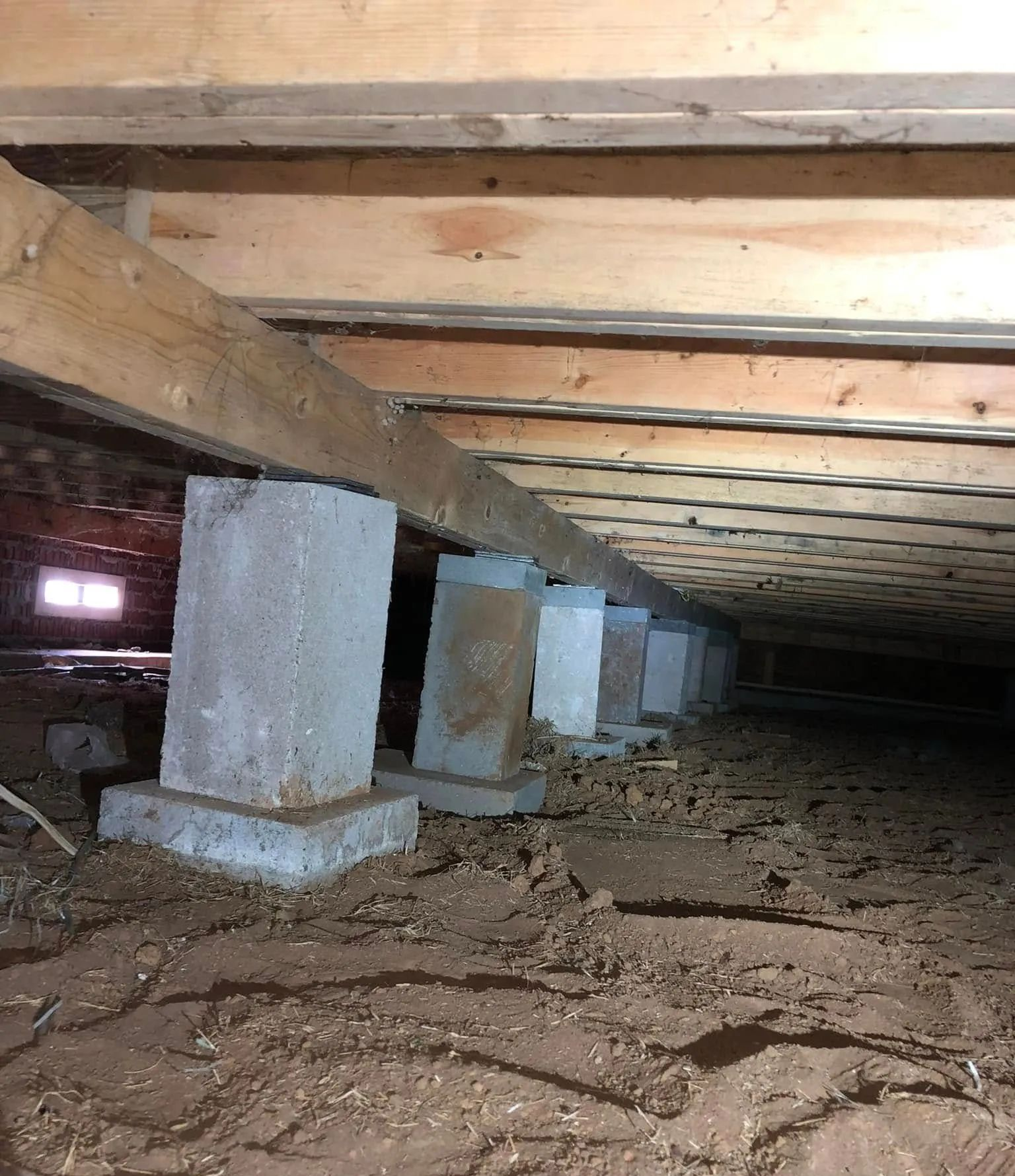
Saturated soil pushes harder against a foundation wall or a perimeter beam than dry soil does. On homes with a crawl space or a pier and beam floor, that moisture can also find its way underneath the house, where it raises humidity and soaks wood framing.
Moisture Where It Should Not Be
Water standing against brick or siding wicks into the material. Over time that leads to stained masonry, rot at the base of wood trim, and a damp, musty smell in the garage or crawl space.
A real evaluation of a sloping or bouncy floor doesn't start with the floor. It starts with mapping elevation across the whole structure — how far has the affected section actually dropped compared to the rest of the house, and does the pattern point to one failure or a wider trend? On a slab, that means elevation readings at a grid of points through the room and the rooms next to it, plus a look at exterior grading, downspout placement, and any cracking that lines up with the sloped area. On a pier-and-beam home, it means getting under the house to check pier contact by hand, look for moisture damage at the beam connections, and measure whether individual piers have shifted out of level next to their neighbors.
That mapping is what turns "the floor feels off over there" into an actual repair plan — adding piers under a slab section that's lost soil support, replacing a beam that's been weakened, fixing drainage that's been feeding one corner of the foundation, or some mix of the three. Guess at a fix without that data, and you'll likely treat the symptom in one spot while the real cause — a moisture imbalance in the soil — moves on to the next section.
Where the Water Is Coming From
A puddle at the foundation is almost always the end of a path, and the fix depends on where that path begins. Walk the outside of your house and look for these common sources.
Roof Runoff
A roof sheds a surprising amount of water in a storm, and all of it has to go somewhere. Gutters that overflow, clog, or sag put that water directly on the soil beside the wall. Downspouts that end at the foundation, or at a short elbow that points at the slab, deliver it to the exact spot you most want to keep dry.
Soil That Slopes Toward The House
The ground beside a foundation should fall away from the structure. Model residential building codes call for the grade to drop at least 6 inches over the first 10 feet when the lot allows it. On many older North Texas lots the opposite has happened. The backfill that was packed against the foundation during construction settles over the years and leaves a shallow trench that holds water.
Flowerbeds And Borders
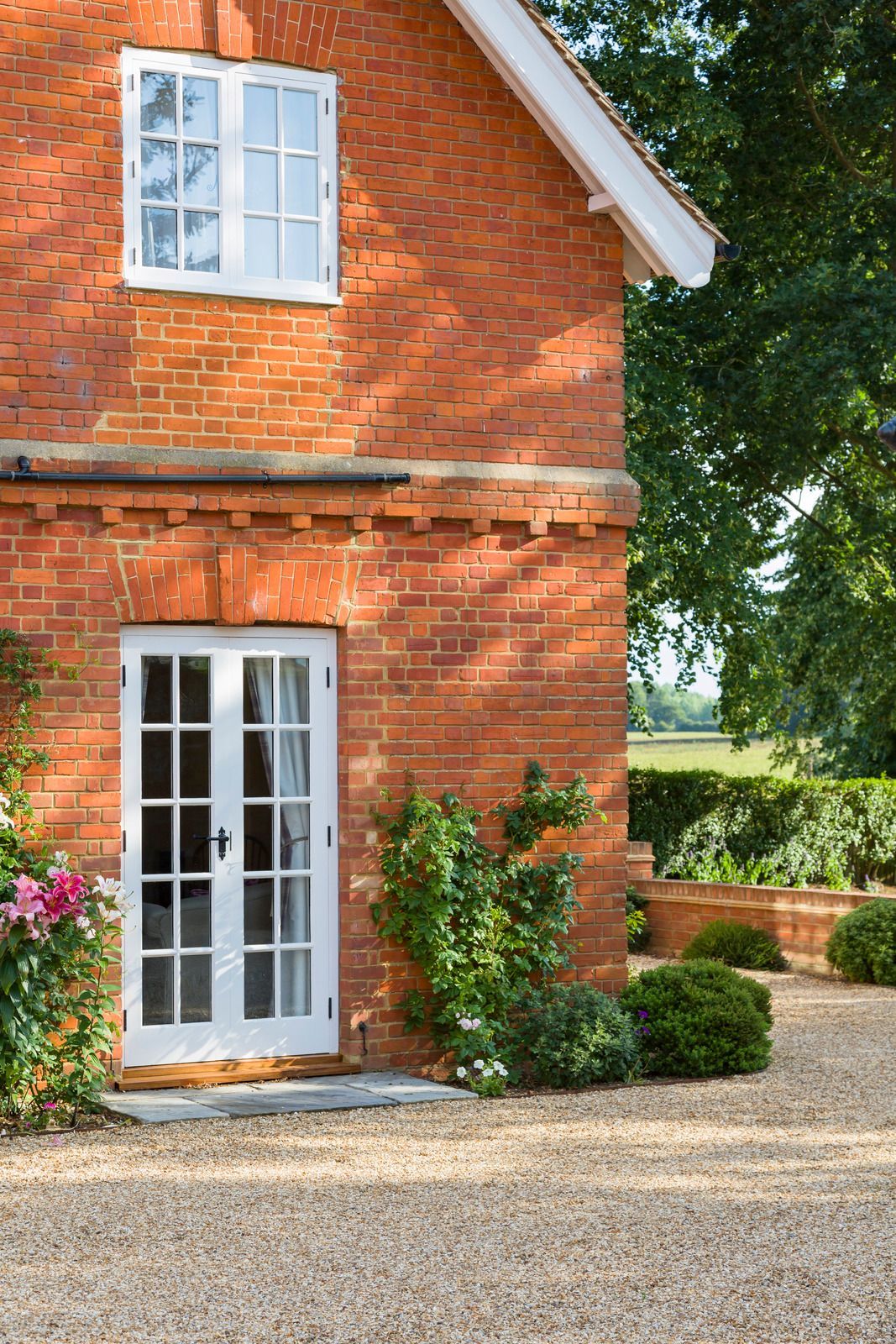
Steel edging, stone borders, and raised beds along the house act like a bathtub rim. They catch rain, hold it against the wall, and keep it from leaving. Mulch piled up against the brick makes the same problem worse and can cover the weep holes along the bottom of the wall that are meant to let moisture out.
Hard Surfaces That Tilt The Wrong Way
Patios, sidewalks, and driveways are poured to shed water, but settlement or a poor original slope can send it back toward the house. Water running across a slab that falls toward the wall will pool at the joint where the two meet.
Water From Next Door
On a sloped street or a lot with a neighboring yard higher than yours, runoff from outside your property line can arrive at your foundation. In that case the answer is usually a way to catch and redirect the flow before it reaches the house.
A real evaluation of a sloping or bouncy floor doesn't start with the floor. It starts with mapping elevation across the whole structure — how far has the affected section actually dropped compared to the rest of the house, and does the pattern point to one failure or a wider trend? On a slab, that means elevation readings at a grid of points through the room and the rooms next to it, plus a look at exterior grading, downspout placement, and any cracking that lines up with the sloped area. On a pier-and-beam home, it means getting under the house to check pier contact by hand, look for moisture damage at the beam connections, and measure whether individual piers have shifted out of level next to their neighbors.
That mapping is what turns "the floor feels off over there" into an actual repair plan — adding piers under a slab section that's lost soil support, replacing a beam that's been weakened, fixing drainage that's been feeding one corner of the foundation, or some mix of the three. Guess at a fix without that data, and you'll likely treat the symptom in one spot while the real cause — a moisture imbalance in the soil — moves on to the next section.
How to Read the Pooling After the Next Storm
You can learn more in an hour of watching than in a week of guessing. The goal is to see where the water travels, how long it stays, and how it behaves along the whole perimeter of the house.
Watch During The Rain, Not Only After
Go outside while it is coming down, with a jacket and a phone for photos. Look at where the gutters spill, where the downspouts discharge, and which way the water streams across the lawn and hard surfaces.
Check Again A Day Later
Water that is gone in a few hours is not worrying. Water that is still standing against the slab a full day after the rain has stopped means the ground has no way to shed it.
Look At The Pattern Around The House
Pooling on one side only, usually the side with a downspout, a bed border, or lower ground, points to a local cause. Wet soil all the way around points to a grading problem across the property.
Mark The Spot
Push a flag or stake into the ground where the water pools, then compare the location with the downspouts and the lowest points in the yard the next time it rains.
Tip: Take a photo of the same spot about thirty minutes into a storm, again when the rain ends, and a third time the next morning. Three pictures show how fast the water arrives, how fast it leaves, and whether it travels toward the house or away from it. A technician can use that record to find the cause much faster than a verbal description.
Signs the Water Has Already Reached the Structure
Sometimes the pooling has been going on for a while before you notice it. Watch for the quieter signs that the moisture has begun to affect the house.
Cracks Near The Wet Side
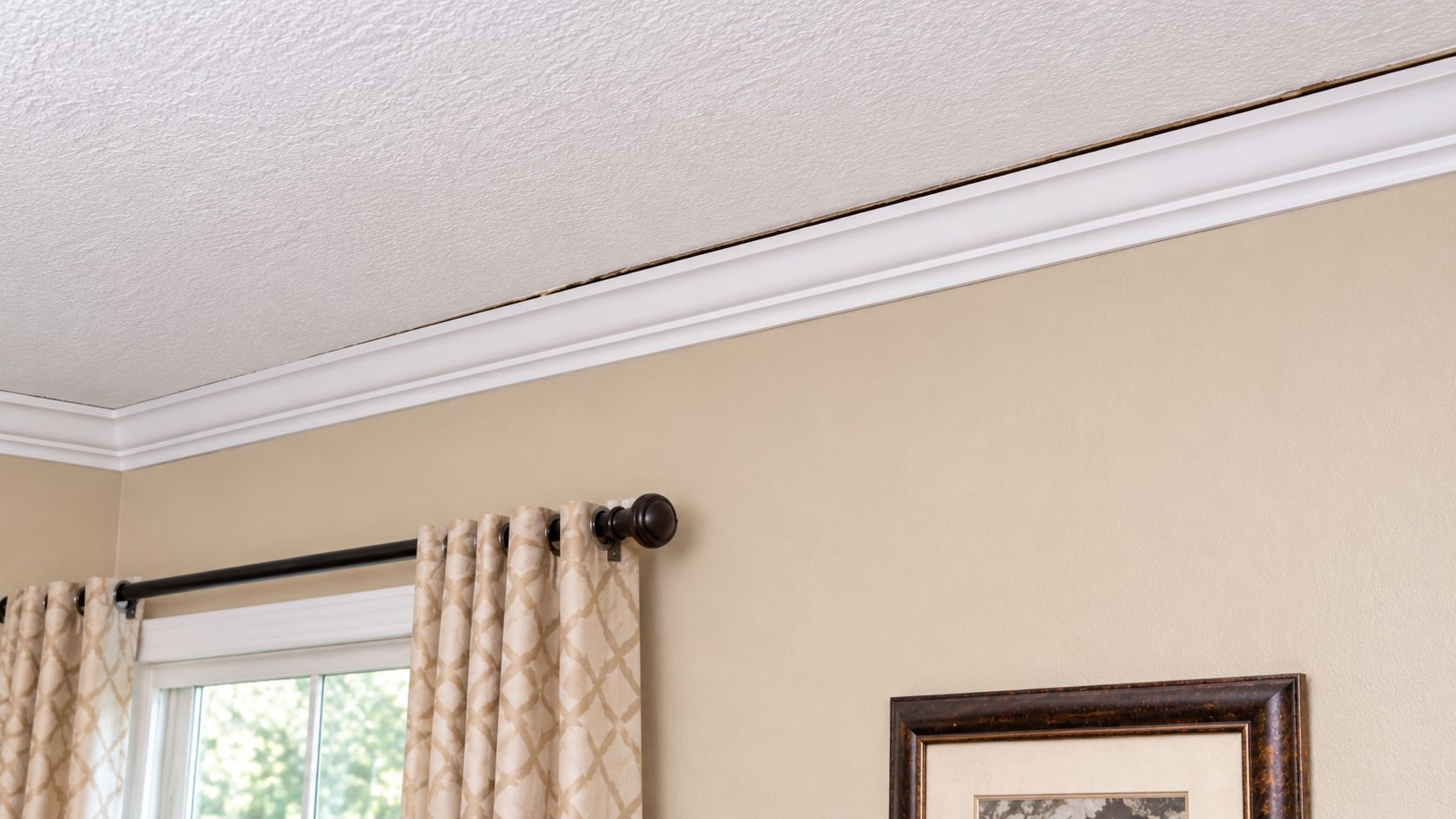
New or widening cracks in brick, particularly stair step cracks, or in drywall on the wall nearest the pooling, can mean the soil there has moved.
Doors And Windows That Stick On That Side
If a door near the wet corner suddenly rubs the frame after a rainy stretch, the opening may have shifted slightly out of square.
A Soft Or Sunken Strip Of Soil
Press a screwdriver into the ground along the foundation. If it sinks in easily or the soil feels spongy and has pulled away from the slab, there may be a void forming below the edge.
Efflorescence And Stains On Masonry
White, chalky deposits or dark streaks low on the brick show that moisture is moving through the wall.
Gaps Between The Slab And The Soil
After a dry stretch, a visible gap that follows the foundation line is the entry point for the next heavy rain.
Warning: If you see water entering the house, a crack that has grown over a few weeks, or soil that has washed out and left the slab edge exposed, do not wait for the next dry season. Moving water and softened soil keep working on the foundation between storms, and the repair needed gets larger the longer the area stays wet.
A real evaluation of a sloping or bouncy floor doesn't start with the floor. It starts with mapping elevation across the whole structure — how far has the affected section actually dropped compared to the rest of the house, and does the pattern point to one failure or a wider trend? On a slab, that means elevation readings at a grid of points through the room and the rooms next to it, plus a look at exterior grading, downspout placement, and any cracking that lines up with the sloped area. On a pier-and-beam home, it means getting under the house to check pier contact by hand, look for moisture damage at the beam connections, and measure whether individual piers have shifted out of level next to their neighbors.
That mapping is what turns "the floor feels off over there" into an actual repair plan — adding piers under a slab section that's lost soil support, replacing a beam that's been weakened, fixing drainage that's been feeding one corner of the foundation, or some mix of the three. Guess at a fix without that data, and you'll likely treat the symptom in one spot while the real cause — a moisture imbalance in the soil — moves on to the next section.
What Actually Fixes It
The right repair depends on what the walk around the house showed. In most cases, the answer is a combination of several measures, put in a sensible order.
Start With The Roof Water
Clean the gutters, check the slope, and extend the downspouts so they discharge well away from the foundation. In places where a surface extension would be in the way of a lawn or walkway, a buried pipe can carry the water out to open ground or to a safe discharge point.
Rebuild The Grade
Where the soil slopes toward the house, the fix is to add compacted fill and shape it so the ground falls away from the wall. A proper slope has to be built with the right material, because loose topsoil will settle again and bring the puddle back. Keep the final surface a few inches below the weep holes in brick so moisture can leave the wall.
Use Swales And Surface Drains For The Large Flow
A shallow channel in the lawn can guide sheet runoff around the house to a better outlet. Where the water collects in a low spot that cannot be graded out, a surface drain or catch basin gives it a place to go.
Add Channel Drains At Hard Surfaces
A narrow grated drain along a patio, a garage entry, or a driveway edge picks up the water that runs toward the house before it reaches the slab.
Install A French Drain Where The Soil Stays Wet
A French drain is a trench with gravel and perforated pipe that collects water from saturated ground and carries it to an outlet. It is the right tool when the soil itself holds water, as opposed to when the water arrives from a single downspout.
Adjust The Beds
Opening the borders of a flowerbed so water can pass, or removing a raised bed that dams the wall, often solves a puddle that looks more complicated than it is.
A real evaluation of a sloping or bouncy floor doesn't start with the floor. It starts with mapping elevation across the whole structure — how far has the affected section actually dropped compared to the rest of the house, and does the pattern point to one failure or a wider trend? On a slab, that means elevation readings at a grid of points through the room and the rooms next to it, plus a look at exterior grading, downspout placement, and any cracking that lines up with the sloped area. On a pier-and-beam home, it means getting under the house to check pier contact by hand, look for moisture damage at the beam connections, and measure whether individual piers have shifted out of level next to their neighbors.
That mapping is what turns "the floor feels off over there" into an actual repair plan — adding piers under a slab section that's lost soil support, replacing a beam that's been weakened, fixing drainage that's been feeding one corner of the foundation, or some mix of the three. Guess at a fix without that data, and you'll likely treat the symptom in one spot while the real cause — a moisture imbalance in the soil — moves on to the next section.
Fixing the Water and the Foundation in the Right Order
When the pooling has already cost the house some support, both problems need attention, and the order matters. If a crew levels a foundation and the water is still sitting beside it, the same wet strip will tug the structure out of position again. Draining the soil and rebuilding the grade first, or alongside the structural work, keeps the repair stable.
If the house has not moved, good drainage may be all it needs. A foundation that never sees large swings in soil moisture is a foundation that stays quiet, and water management is the least disruptive way to keep it that way.
Frequently Asked Questions
How long should water stay on the ground near my foundation after a rain?
A few hours of surface water after a hard downpour is normal. Water still standing against the slab a day later means the ground is not shedding it, and the cause needs finding.
Can water pooling against the foundation cause cracks?
It can contribute. Wet clay swells and dry clay shrinks, so a strip that stays wet creates uneven support beneath the slab. That often leads to cracks, sticking doors, and sloping floors nearby.
Is it a problem if the pooling happens only once or twice a year during the biggest storms?
Occasional shallow water during extreme storms is less worrying than regular pooling. Still, trace the flow, because the first storm after a dry summer sends water deep into open soil cracks along the foundation.
Will extending my downspouts be enough?
Sometimes. When roof runoff is the main source, a longer extension or buried line can solve it completely. If the yard slopes toward the house or stays soggy, grading or drains are also needed.
Do homes with pier and beam foundations have the same problem?
Yes, with some differences. Pooled water can enter the crawl space, raise humidity, and soften soil around the piers. The wood floor frame absorbs moisture too, causing soft floors, musty odors, and sagging beams.
Should I water my foundation if the soil is dry on one side and pooling on another?
That uneven pattern is exactly what to avoid. Fix the pooling first so the wet side stops receiving extra water, then let a foundation specialist advise on keeping soil moisture steady during dry spells.
Keeping Storm Water Away From Your Slab Edge
Water lingering beside the foundation after a storm is easy to shrug off, but on expansive clay it quietly keeps one strip of soil swollen while the rest of the yard dries. That uneven moisture is what pulls a slab out of position over time. Watching where the water travels during and after the rain, and how long it stays, usually points straight to the source, whether that is a downspout, a sunken grade, or a bed border.
Lasting results come from sending that water somewhere harmless and fixing the ground in the right order. Corrected grading, extended or buried downspouts, and
drains placed
where the soil cannot shed water on its own keep moisture steady around the whole house. Garcia's Foundation and Drainage
has spent 35
years helping homeowners in Dallas, TX protect the soil beneath their slabs, and that steady approach lets each new storm pass without leaving the foundation to pay for it.